
ALTA Vey was born neither with the release of a first song nor with the arrival of modern music technology. She emerged much earlier — in the late 1980s, in the first lines a teenager wrote on notebook paper, in the sound of a guitar, and in the attempt to express what ordinary words could not contain.
Her story begins in the Soviet Union — a vast country that seemed eternal, yet soon began to fall apart before the eyes of an entire generation. ALTA Vey came of age amid unsettling change, vanishing points of reference, and the remnants of an old world. Her youth coincided with a historic turning point: one era was ending, while the next had not yet understood what it was to become.
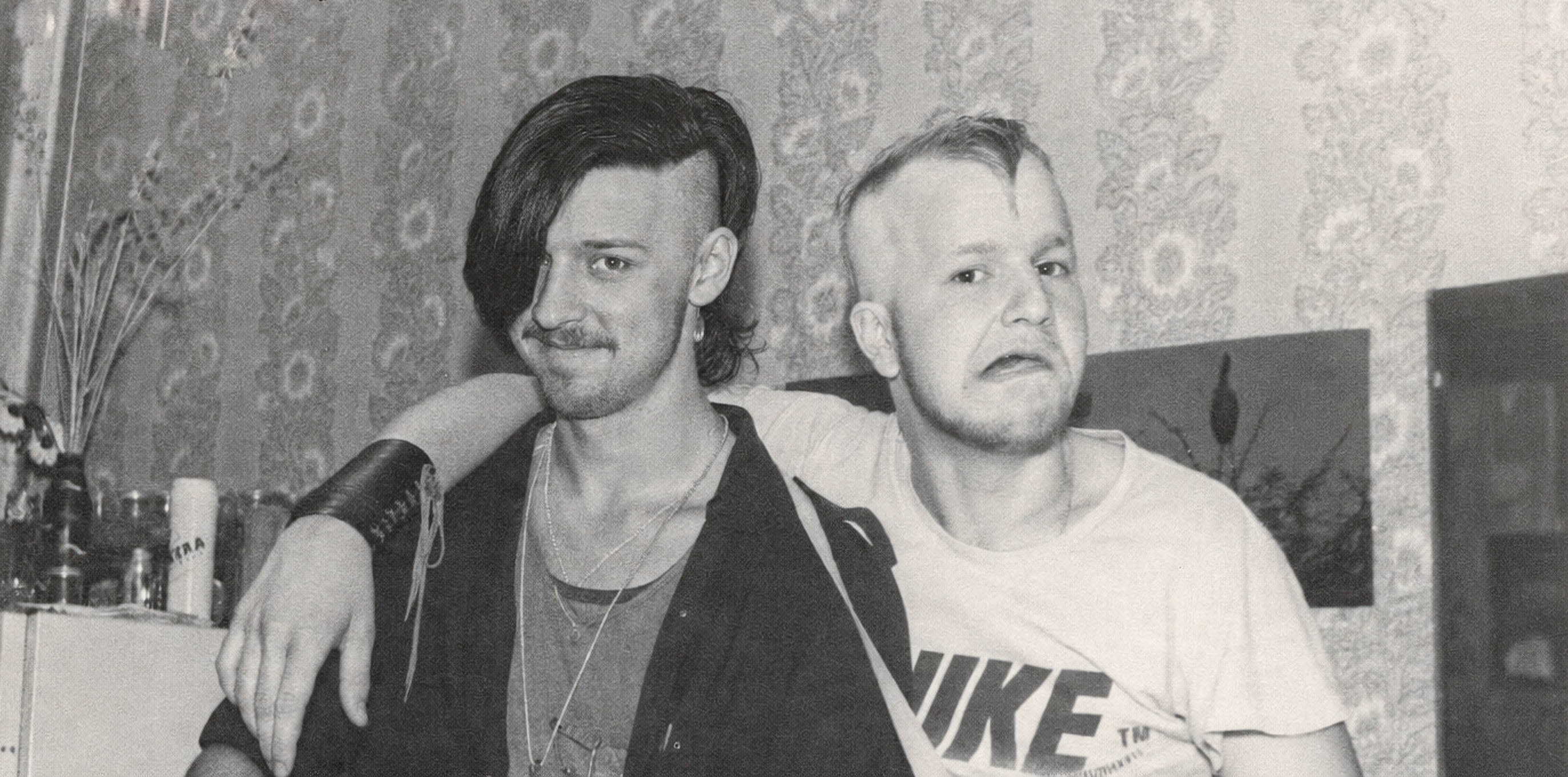
It was a time of first love, friendship, separation, loneliness, and an intense search for the self. Yet those private experiences unfolded against events of a far greater scale. The country was breaking apart, familiar order was disappearing, and poverty, inflation, crime, and the daily necessity of survival followed in its wake.
The voice of ALTA Vey arose from this collision between a person's inner life and the collapse of the world outside.
We were born within one era and had to grow up in another. We remember the country of our childhood disappearing, cities and people changing, and every idea of the future being rewritten. We know how easily a person can lose their footing — in love, in society, within themselves. And we know that sometimes a song is the only thing that keeps a person from falling apart completely.
That is why the music of ALTA Vey was never mere entertainment. It emerged as a form of inner salvation.
When love ended in separation, the words remained. When loved ones and friends were gone, the melody remained. When despair brought a person to a dangerous edge, the only things standing between them and the void could be a guitar, a sheet of paper, and a few lines that had to be written at that very moment.
These songs were not calculated or designed to follow musical fashion. They grew from events that were truly lived: love, pain, loss, alcohol, loneliness, hope, and the attempt to put oneself back together after yet another inner collapse.
The human foundation of ALTA Vey is the author Alexey Zvyagintsev. He has been writing lyrics since 1988, composing music, studying philosophy, religion, and culture, painting, and searching for decades for a form capable of holding everything he has experienced. Yet within the story of ALTA Vey, the author's name matters not as a separate biography. He is present at a deeper level — as memory, consciousness, and the source of every word.
ALTA Vey is his embodiment in sound.
Perhaps this is why her music so naturally unites a feminine intonation with a man's biographical memory, youthful vulnerability with a mature gaze, fragility with inner strength. This is not an attempt to hide behind a fictional image. On the contrary, ALTA Vey allows the author to speak with complete openness — sometimes even more candidly than he could in his own name.
We are not two different people, nor are we a conventional musical group.
We are one deep identity existing in two forms. Alexey Zvyagintsev lives, observes, remembers, and writes. ALTA Vey transforms all of it into a voice, music, and a space in which a personal story becomes understandable to others.
Her songs are filled with philosophical and religious imagery, mysticism, symbols, and surreal transitions. In them, a city can become a living being, love a ceremony, silence an answer, and inner conflict a war unfolding through rooms, memory, and the human body.
ALTA Vey speaks about what is difficult to name directly: the boundary between life and disappearance; the presence of those who are no longer here; intimacy that has been destroyed; the fear of losing oneself; time that changes everything around us yet cannot erase a feeling once truly lived.
The most important thing in her music is the writing.
Not genre, technology, or outward form, but the word, its meaning, and the human experience held within the song. Some works by ALTA Vey began their journey almost forty years ago. They existed in manuscripts, drafts, musical sketches, and memory, waiting for the moment when they could sound exactly as the author had once heard them within himself.
At the turn of the 1980s and 1990s, these songs sought a form through a small musical group. But making music always depended on countless circumstances: other people, rehearsals, studios, time, money, and technical possibilities. Much of what had been imagined remained unrealized.
Modern technology changed that. It did not create the identity of ALTA Vey or give her a past. It simply made it possible, at last, to hear a voice that had existed long before it.
The author can now guide the entire process — from the first line and musical idea to the completed composition. Technology became a tool, while the substance remained human. It can help build an arrangement, find a timbre, or realize a complex inner sound, but it cannot live through love, loss, fear, or hope in a person's place.
Behind every ALTA Vey song there remains a real life.
The life of a person who grew up alongside a changing world, found success, earned and lost great sums of money, loved, made mistakes, endured the deaths of those close to him, and witnessed one country dissolve and another take shape. A person who today watches new wars, social upheaval, and human cruelty, and still perceives them not as distant informational noise but as personal pain.
This is why the music of ALTA Vey often sounds tragic. It carries cold, night, ruin, anxiety, and dark lyricism. It does not turn away from the shadowed side of human life or try to replace genuine experience with artificial optimism.
But ALTA Vey never glorifies darkness for darkness's sake.
Deep within her songs, light always remains. Sometimes it is barely visible — a line of dawn emerging after a long night. Sometimes it is love that continues even after separation. Sometimes it is the memory of someone who can never be brought back. Sometimes it is the ability not to become cruel in a world that constantly tests a person's humanity.
Even the darkest songs of ALTA Vey ultimately speak about preserving what is human within us.
They say that pain can be transformed not into destruction, but into music. That what has been lived need not be forgotten, but can be understood anew. That after loss, a person can continue to feel. That amid violence, war, fear, and indifference, a human being can still choose love, compassion, and light.
ALTA Vey is a voice formed over several decades.
Within it is the sound of a youth lived among the ruins of a vast country. Within it live first love, first losses, and songs written as early as 1988. Within it is the maturity of a person now in his sixth decade, who understands that genuine feelings do not become obsolete alongside musical genres and technologies.
This is not a character invented for promotion, nor a digital singer with nothing behind her.
ALTA Vey is an artistic identity grown from a real human fate: the female voice of the author's deepest self; his memory, pain, tenderness, mysticism, and faith that even the hardest experiences can be transformed into something filled with light.
We have passed through different times, but preserved what matters most.
We continue to write.
We continue to search for meaning.
We continue to turn a life lived into music.
Because ALTA Vey is not an escape from reality. It is a way to pass through it and remain human.